The Dragon Boat Festival A Deep Dive into China's Ancient Tradition
The Dragon Boat Festival, known as Duānwǔ Jié (端午节) in Chinese, is one of China’s most significant traditional holidays. Celebrated for over two thousand years, it combines ancient legend, communal ritual, and seasonal customs. This article explores the festival‘s origins, its legendary hero, and the time‑honored practices that still take place across China today.
When the Festival Falls
The Dragon Boat Festival takes place on the 5th day of the 5th month of the Chinese lunar calendar. On the Gregorian calendar, the date usually falls in late May or mid‑June. The festival is a public holiday in mainland China, as well as in Taiwan, Hong Kong, and Macau. In 2026, the festival is celebrated on June 19.
For a complete list of public holidays and festivals throughout 2026, check out our 2026 China Festival Calendar for Foreign Teachers.
The Legend of Qu Yuan
The most widely known story behind the Dragon Boat Festival centers on Qu Yuan (屈原, c. 340–278 BC), a patriotic poet and minister of the ancient State of Chu during the Warring States period. Qu Yuan was deeply loyal to his country. When he saw that Chu was falling into corruption and facing military defeat, he wrote passionate poems expressing his sorrow and warning of disaster.
After the capital of Chu was captured by the rival State of Qin, Qu Yuan, in despair, drowned himself in the Miluo River on the 5th day of the 5th lunar month. According to legend, local people who admired him rushed out in their boats to search for his body. They beat drums and splashed their oars to keep evil spirits and fish away from him. They also threw lumps of cooked sticky rice wrapped in leaves into the river, hoping that the fish would eat the rice instead of Qu Yuan’s body.
This act of loyalty and grief is said to be the origin of the festival‘s two most famous traditions: dragon boat racing and eating zongzi (sticky rice dumplings).
Dragon Boat Racing
Dragon boat racing is the most visually spectacular part of the festival. The boats are long and narrow, typically 10 to 15 meters in length, and can hold 20 to 30 paddlers. Each boat is decorated with a carved dragon’s head at the bow and a dragon‘s tail at the stern. A drummer sits at the front, beating a rhythm to keep the paddlers synchronized, while a steerer at the back controls the direction.
The races are held on rivers, lakes, and reservoirs throughout China. Teams often train for weeks or months in advance, and the atmosphere on race day is electric — drums pound, crowds cheer, and boats cut through the water at remarkable speed. In many regions, the race is not just a competition but also a ritual to pray for good weather, health, and a bountiful harvest.
Eating Zongzi
Zongzi (粽子) are sticky rice dumplings wrapped in bamboo or reed leaves and tied with plant fibers. They are the festival’s essential food. The preparation method has changed little since ancient times: glutinous rice is soaked, then wrapped with various fillings inside leaves, and finally boiled or steamed for several hours until the rice becomes soft and absorbs the fragrance of the leaves.
Zongzi come in many regional varieties. In northern China, they are often sweet, filled with red bean paste, jujube dates, or candied fruits. In southern China, savory zongzi are more common, with fillings such as marbled pork belly, salted duck egg yolk, mushrooms, chestnuts, and even dried shrimp. Some versions are plain, meant to be dipped in sugar or honey.
Families traditionally make zongzi at home several days before the festival, often gathering multiple generations around a table to wrap and tie the dumplings together. Today, ready‑to‑eat zongzi are widely available in supermarkets and bakeries, but home‑made ones remain cherished for their personal touch.
Hanging Herbs and Warding Off Evil
The Dragon Boat Festival falls at the beginning of summer, when temperatures rise, insects become more active, and diseases spread more easily. As a result, many customs focus on protection and purification. People hang bundles of calamus (chāng pú) and wormwood (ài cǎo) above their doors. Both herbs are strongly fragrant and believed to repel insects, mosquitoes, and evil spirits.
In some regions, people also bathe in water infused with these herbs, or hang up pictures of Zhong Kui (a mythical figure who drives away ghosts). Children might wear perfume pouches (xiāng bāo) — small silk sachets filled with aromatic herbs — to protect them from illness.
Realgar Wine
Another traditional custom is drinking realgar wine (xióng huáng jiǔ). Realgar is a yellow‑orange mineral compound that was anciently believed to have medicinal properties. People would dissolve realgar powder in rice wine and drink it, or dab it on children‘s foreheads, noses, and ears, to drive away venomous insects and snakes. Today, because realgar contains arsenic and is toxic, the custom is largely symbolic. Many people skip the drinking part and simply make a mark with realgar wine on a child’s skin, or they use plain rice wine instead.
Other Local Customs
Across different parts of China, the Dragon Boat Festival has additional local variations. For example:
- •In some areas of Guizhou and Hunan provinces, people hold drumming and dancing ceremonies to honor Qu Yuan.
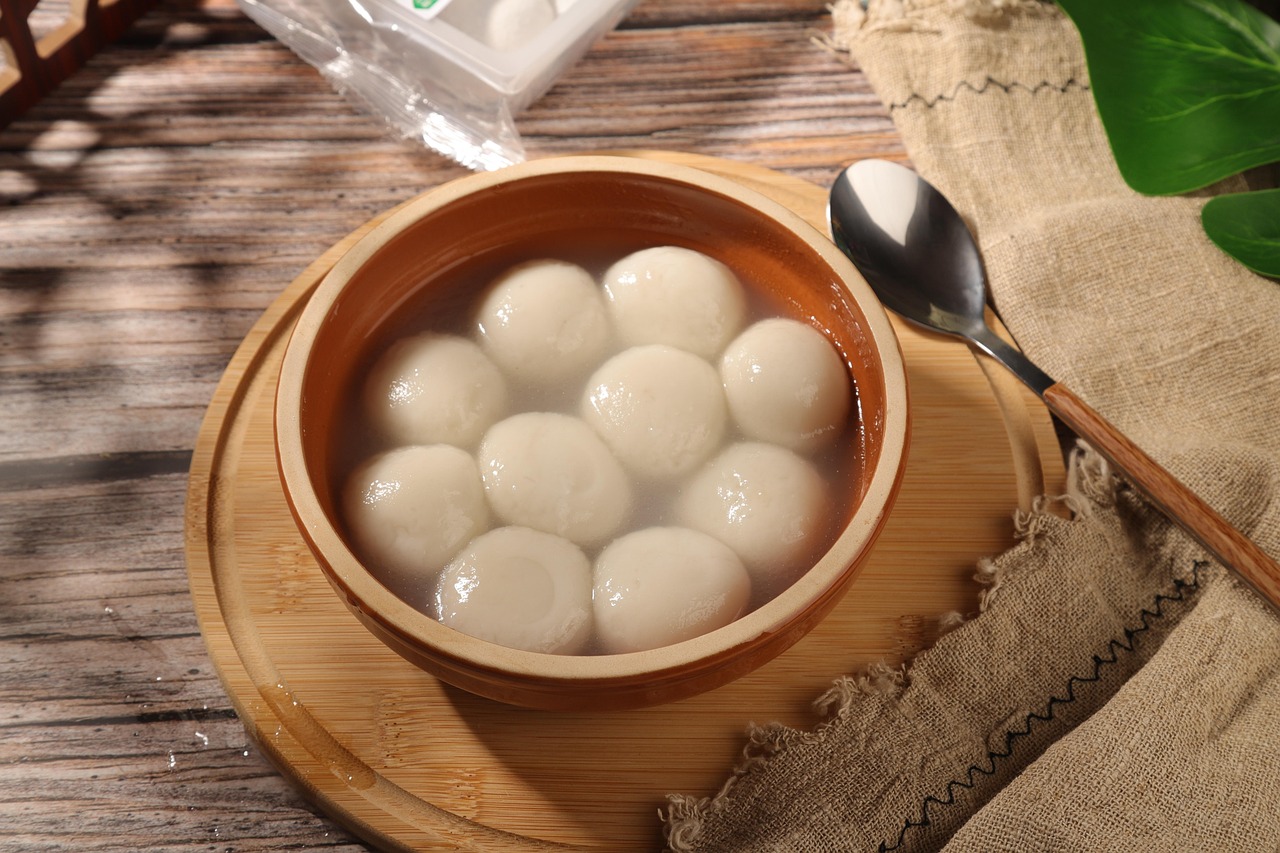
- •In Jiangsu and Zhejiang provinces, people eat green rice balls and salted duck eggs alongside zongzi.
- •In Taiwan, some communities hold “stealing boats” games as part of the festivities.
- •In certain places, people write spells on red paper and paste them on doors for protection.
Despite these regional differences, the core elements — dragon boat racing, eating zongzi, and seasonal purification — remain consistent throughout the Chinese cultural sphere.
Cultural Significance
The Dragon Boat Festival is more than a series of exciting activities. It reflects deep‑rooted Chinese values: loyalty to one‘s country, respect for ancestors, community solidarity, and harmony between humans and nature. The story of Qu Yuan has been told for millennia as a model of moral integrity and patriotic devotion. The rice dumplings and boat races, originally acts of grief and hope, have become symbols of shared cultural identity.
In 2009, the Dragon Boat Festival was inscribed on the UNESCO Representative List of the Intangible Cultural Heritage of Humanity — the first Chinese festival to receive this recognition. Today, dragon boat races are held in many countries around the world, and zongzi can be found in Chinatowns across every continent.